Modernizing Rural Distribution Grids: How to Prioritize Grid-Edge Data to Drive Higher-Return Investments
Back to Top
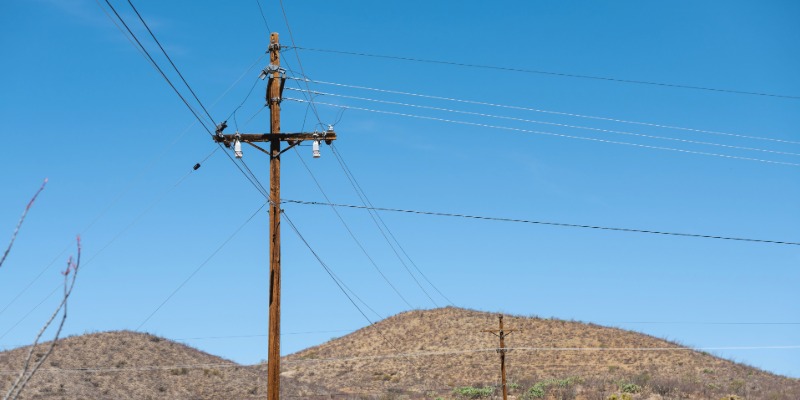
Electric cooperatives have always stood out to me because of how personal their work is. In our conversations, they never say the word “customers.” Instead, cooperatives talk about their members—the neighbors and communities who count on them. Cooperatives exist to serve their members and are committed to doing so.
In part 1 of this series on modernizing rural grids, we explored the challenges that can complicate that mission. In part 2, we’ll focus on solving for those challenges through targeted investment.
While there are many places to invest on the grid, data-backed decision-making helps you prioritize where to focus. And the data shows that upgrades to overhead distribution lateral lines can deliver high, visible returns.
Why Data Pinpoints Grid-Edge Laterals for Investment
About 90% of outages happen in the distribution system, with most repeat and sustained outages originating on overhead laterals, especially rural, long, heavily vegetated, or lightly protected lines.
Seventy to eighty percent of outage-causing disturbances on laterals are temporary—driven by wildlife, tree limbs, or weather. With 21 laterals per the average distribution circuit, these overhead lines account for a significant amount of preventable downtime.
Laterals are also one of the easiest parts of the system to evaluate. Even basic outage and crew data quickly show which laterals drive recurring problems, allowing you to focus investment where it matters most.
Protection Upgrades Deliver Measurable Reliability Returns
Laterals deserve priority not because they are the largest assets on the system, but because they are high-impact and actionable.
When guided by data, lateral upgrades can deliver strong, predictable reliability returns for cooperatives. Returns are not only financial, but relational, as high reliability is often correlated with high member satisfaction.
Specifically, data pinpoint lateral reclosing as a strong investment. Integrating lateral reclosing into existing protection schemes delivers measurable reliability gains without the cost, risk, or complexity of systemwide initiatives.
Reliability returns on investment include:
- Time: Reduced outage duration
- Frequency: Fewer repeat interruptions on the same line segments
- System hardening: Improved performance during both routine events and storms
In fact, some cooperatives have reported that they’ve seen the following average reliability improvements with deployments of S&C’s TripSaver® II Cutout-Mounted Recloser:
- SAIDI: 20% average improvement
- Outage frequency reduction: 36% average reduction
O&M Savings Drive the Data Point Home
The operational returns accrue with an electronic, cutout-mounted recloser.
- Fast installation: Quicker and easier to deploy compared to upgrading substations or building feeder ties, the device installs into cutout mounts, preserving familiar crew operational practices for faster adoption.
- Reduced maintenance costs: With no user serviceable parts or replacement parts, cooperatives don't have the same annual maintenance costs they have with hydraulic reclosers.
- Field efficiencies: Power restoration for temporary faults reduces unnecessary truck rolls and after-hour callouts. Permanent fault isolation and a drop-out function that provides a highly visible open gap reduces patrol time. With truck roll costs often exceeding $1,000, a single device pays for itself with a few avoided dispatches. Crews gain back time for critical initiatives rather than repeatedly restoring service on the same laterals.
Use Data to Target Your Lateral Investment
Cooperative programs can begin with simple, existing data rather than complex analytics to determine where lateral reclosing will have the greatest impact.
- Outage management system data can quickly identify laterals that experience repeat outages.
- Customer minutes interrupted highlights segments with the largest member impact.
- Restoration and crew data help pinpoint laterals with extended patrol or access challenges.
Informed data decisions helped Habersham Electric Membership Corporation (HEMC), a cooperative from northeastern Georgia, to find success. HEMC worked with S&C and Southwire® Digital Solutions to target automation solutions and TripSaver II recloser deployments. The cooperative’s program resulted in:
- 38% decrease in minutes without power
- 14.6% average reduction in outage duration
These results have generated strong interest from other cooperatives because the approach is practical and repeatable. Outage data is already on hand, and system analysis programs can help cooperatives more quickly identify where to pilot reclosers for impact. The Overhead Lateral Location Assessment Program from S&C and Southwire for TripSaver Reclosers can quickly surface priority fuse replacement locations with potential for reliability and O&M improvement.
Most cooperatives find that a relatively small percentage of laterals account for a large share of reliability issues. Addressing these first enables early success, clear before-and-after measurement, and a disciplined approach to expanding improvements over time.
| Data Workflow for Improving Lateral Reliability |
| Use existing data to identify the most troublesome laterals and apply targeted improvements. |
| 1 |
Identify |
Review outage data
Find repeat faults
Flag worst laterals |
| 2 |
Prioritize |
Rank by impact
Evaluate SAIDI/CMI
Consider crew effort |
| 3 |
Apply |
Add protection
Deploy automation
Improve isolation |
| 4 |
Measure |
Track results
Gather feedback
Scale success |
Ensure Success with a Feedback Loop
One critical part of using data to target lateral investments for improved performance: getting buy-in and meaningful, actionable feedback from all levels of an organization.
Consistently reporting and discussing outages, identifying recurring problem areas, and forming cross-functional teams to address the challenges can turn insight into action and create momentum for continued improvement.
Cooperatives are special teams that, when working together around shared priorities, can solve reliability challenges for the benefit of all. By aligning data and lateral investment decisions, cooperatives can strengthen reliability, support their workforces, and demonstrate disciplined stewardship of member resources—making steady, measurable progress one lateral and one community at a time.
Looking for a fast, cost-effective way to modernize your system?
Explore how the TripSaver® II Cutout-Mounted Recloser can help.
Protection
,
Reclosing
,
Automation
,
Overhead
,
Reclosers - Outdoor Distribution
,
Power Reliability
,
Electric Service Reliability
,
Grid Reliability
,
Power Outages
,
Electric Power
,
Distribution Automation
,
Electric Utilities
,
TripSaver II Cutout-Mounted Recloser
,
Grid Resilience