Building Storm Resilience at the Very Edge of the Grid
Back to Top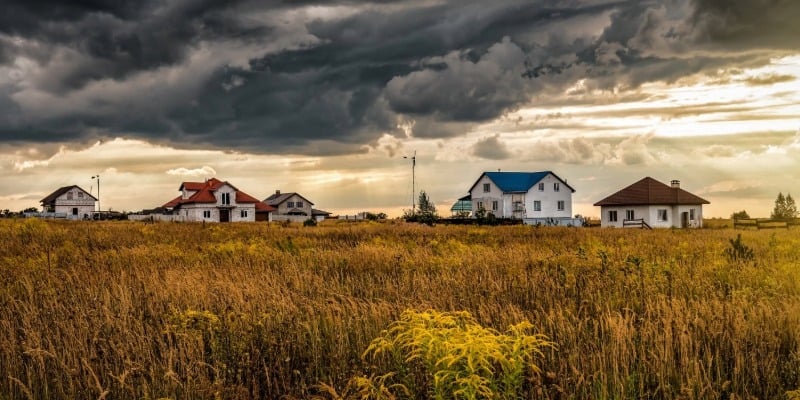
More frequent and severe weather events are placing unprecedented strain on the distribution grid—and nowhere is that strain felt more acutely than at the very edge. When a fuse on a distribution transformer operates, crews are often dispatched, only to find nothing obviously wrong. The crew replaces the fuse, and service is restored after a period of time. But the outage is logged as “no problem found” or “unknown cause.”
For customers, it’s another unnecessary, sustained interruption. For utilities, it’s another truck roll, a negative impact on reliability metrics, and another unknown cause. These incidents highlight a growing resilience challenge: a lack of visibility at the grid edge.
The Hidden Cost of “No Problem Found”
Often, the underlying event is temporary—animal or vegetation contact, a momentary flashover, or other fleeting conditions. Severe weather and lightning also frequently trigger fuse operations at distribution transformers.
Outage Management Systems capture the outcome of these events, not the cause. As a result, outages are commonly classified as “no problem found,” and re‑fusing becomes the default response. Over time, this reactive cycle leads to repeated outages at the same locations, escalating O&M costs, and mounting customer frustration.
Taking a Closer Look at the Last Mile
The issue is amplified by the physical realities of the grid edge. Laterals make up the “last mile” of the system, often with distribution transformers serving small load pockets—typically just a few homes—at the very edge.
These lightly loaded lines face greater exposure to weather, vegetation, and wildlife, and during storms, fault probability increases. Customers at the grid edge are typically the last to be serviced and often wait long periods for service restoration. Restoration under pressure raises the risk of re-fusing errors in an effort to get service back on quickly. The result is a segment of the grid with high-outage frequency, low visibility, and significant operational uncertainty.
Turning Data into Insight
What’s missing isn’t effort, it’s insight. Utilities already have the data needed to better understand grid-edge performance.
By analyzing historic outage records, Customer Experiencing Multiple Interruptions (CEMI) metrics, and OMS data—paired with GIS, SCADA, weather information, and AMI, if available—utilities can identify clusters of repeat outages. These patterns often point to laterals where exposure to weather, wildlife, or vegetation contact is high and traditional fuse protection is no longer adequate. Weather and lightning density data further refine where storms are most likely to drive repeat failures.
From Reactive Fixes to Targeted Investment
Instead of asking, “Where did the fuse blow?”, utilities can ask, “Where does the data show this will happen again?”
Targeted deployment of modern protection technologies, such as electronically controlled single-phase resettable interrupters, can help—often with a return on investment. Proactively upgrading protection is an approach that shifts spending from reactive O&M to planned capital, strengthening the case for system improvements.
S&C’s VacuFuse® II Self-Resetting Interrupters are uniquely suited for the grid-edge because they are resettable transformer-fuse replacement devices. Just like traditional fuses, they install into cutouts and drop open at the end of their operating sequence, but their vacuum interrupters quickly clear faults without the noise and debris associated with expulsion fuses.
VacuFuse II interrupters are built with electronic controls, offering significant benefits over conventional transformer fuses by:
- Avoiding unexpected outages from overcurrent stress, TCC curve shifts, and nuisance tripping
- Preventing re-fusing errors because there’s no fuse to replace
- Allowing for easy integration and coordination with upstream devices
The non-fault-testing model is ideal for locations where reclosing is not desired. Where fault testing can be used, fault-testing units will automatically restore power for temporary faults, avoiding unnecessary sustained outages, improving reliability metrics such as SAIDI, SAIFI, and CEMI, and further expediting storm recovery efforts.
By focusing on the last mile as an opportunity, utilities can strengthen resilience and enhance reliability across the entire system—because resilience built at the very edge benefits the whole grid.
Build Resilience and Reliability for Your Customers
Explore how the VacuFuse® II Self-Resetting Interrupter can help.