<?xml version="1.0" encoding="UTF-8"?><rss version="2.0"
	xmlns:content="http://purl.org/rss/1.0/modules/content/"
	xmlns:dc="http://purl.org/dc/elements/1.1/"
	xmlns:atom="http://www.w3.org/2005/Atom"
	xmlns:sy="http://purl.org/rss/1.0/modules/syndication/"
		>
<channel>
	<title>Comments for GridTalk</title>
	<atom:link href="http://www.sandc.com/blogs/index.php/comments/feed/" rel="self" type="application/rss+xml" />
	<link>http://www.sandc.com/blogs</link>
	<description>S&#38;C Electric Company&#039;s Corporate Blog</description>
	<lastBuildDate>Sat, 24 Mar 2012 16:45:08 +0000</lastBuildDate>
	<sy:updatePeriod>hourly</sy:updatePeriod>
	<sy:updateFrequency>1</sy:updateFrequency>
	<generator>http://wordpress.org/?v=3.2.1</generator>
	<item>
		<title>Comment on Checking In: How&#8217;s That New Year’s Resolution Going? by Parfait</title>
		<link>http://www.sandc.com/blogs/index.php/2012/02/checking-in-hows-that-new-years-resolution-going/comment-page-1/#comment-76</link>
		<dc:creator>Parfait</dc:creator>
		<pubDate>Sat, 24 Mar 2012 16:45:08 +0000</pubDate>
		<guid isPermaLink="false">http://www.sandc.com/blogs/?p=1070#comment-76</guid>
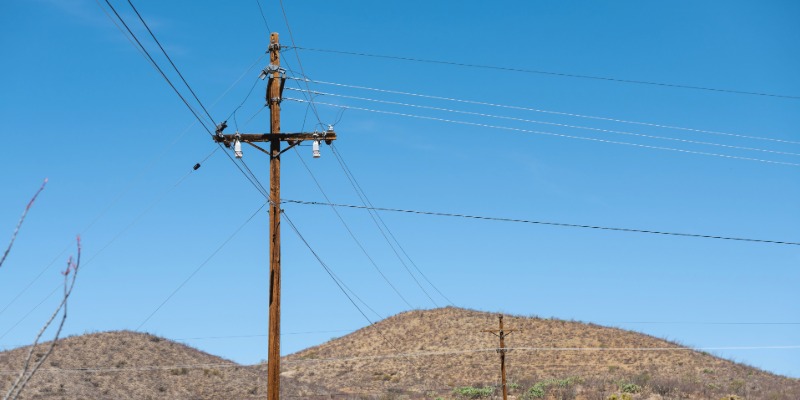
		<description>One other solution to help resolve issues with our electric grid is encouraging public input from everyday people who observe issues at a quicker pace than routine inspectors: faulty and aging wooden poles, sagging lines, obstructions with trees and buildings, rusting transformers, and debris in substations and along distribution networks. 

The newly launched InfraInput.org welcomes real-time input from everyday users of infrastructure including the electric grid. This crowdsourcing platform, available as a web and mobile app, allows anyone to proactively prevent non-emergency issues to worsen as they document issues for the attention of public managers and policymakers. 

The National Academy of Engineers considered the U.S. electric grid the greatest engineering achievement of the 20th century for ubiquitously powering homes and businesses. It only makes common sense that the general public, the chief stakeholder and energy user, become better stewards of this massive yet aging and overused engineering wonder.</description>
		<content:encoded><![CDATA[<p>One other solution to help resolve issues with our electric grid is encouraging public input from everyday people who observe issues at a quicker pace than routine inspectors: faulty and aging wooden poles, sagging lines, obstructions with trees and buildings, rusting transformers, and debris in substations and along distribution networks. </p>
<p>The newly launched InfraInput.org welcomes real-time input from everyday users of infrastructure including the electric grid. This crowdsourcing platform, available as a web and mobile app, allows anyone to proactively prevent non-emergency issues to worsen as they document issues for the attention of public managers and policymakers. </p>
<p>The National Academy of Engineers considered the U.S. electric grid the greatest engineering achievement of the 20th century for ubiquitously powering homes and businesses. It only makes common sense that the general public, the chief stakeholder and energy user, become better stewards of this massive yet aging and overused engineering wonder.</p>
]]></content:encoded>
	</item>
	<item>
		<title>Comment on Can Consumers Afford a Smart Grid-Ready Home? by Mike Edmonds</title>
		<link>http://www.sandc.com/blogs/index.php/2012/01/can-consumers-afford-a-smart-grid-ready-home/comment-page-1/#comment-70</link>
		<dc:creator>Mike Edmonds</dc:creator>
		<pubDate>Mon, 06 Feb 2012 12:47:00 +0000</pubDate>
		<guid isPermaLink="false">http://www.sandc.com/blogs/?p=1038#comment-70</guid>
		<description>Interesting perspectives!  I agree that consumers will want to maintain ultimate control of the operation of their smart grid-ready appliances, thermostat, and other gadgets.  They will determine the settings for when these devices operate, not the utility.  And because the infrastructure needed to operate these devices will be on the customer side of the meter, consumers will have responsibility to ensure everything is working properly, just like every other device installed in the home.

Data protection is certainly a hot topic as well.  I admit that I am skeptical that the capture of electricity consumption data will pose much risk to consumers, but there are people who feel differently.  To address these concerns, smart meter &quot;opt out&quot; programs are gaining ground (the California Public Utilities Commission, for instance, just agreed to PG&amp;E&#039;&#039;s meter opt-out plan).

Both factors--the reliance on consumers taking action to adjust electricity use, and the fact that some customers will opt out of having an advanced meter installed at their home at all--would seem to indicate that grid-based technology, which offers utilities more control, will be essential to reduce peak demand as well as energy costs.

Thank you for reading!</description>
		<content:encoded><![CDATA[<p>Interesting perspectives!  I agree that consumers will want to maintain ultimate control of the operation of their smart grid-ready appliances, thermostat, and other gadgets.  They will determine the settings for when these devices operate, not the utility.  And because the infrastructure needed to operate these devices will be on the customer side of the meter, consumers will have responsibility to ensure everything is working properly, just like every other device installed in the home.</p>
<p>Data protection is certainly a hot topic as well.  I admit that I am skeptical that the capture of electricity consumption data will pose much risk to consumers, but there are people who feel differently.  To address these concerns, smart meter &#8220;opt out&#8221; programs are gaining ground (the California Public Utilities Commission, for instance, just agreed to PG&amp;E&#8221;s meter opt-out plan).</p>
<p>Both factors&#8211;the reliance on consumers taking action to adjust electricity use, and the fact that some customers will opt out of having an advanced meter installed at their home at all&#8211;would seem to indicate that grid-based technology, which offers utilities more control, will be essential to reduce peak demand as well as energy costs.</p>
<p>Thank you for reading!</p>
]]></content:encoded>
	</item>
	<item>
		<title>Comment on Can Consumers Afford a Smart Grid-Ready Home? by E.A. Heckman</title>
		<link>http://www.sandc.com/blogs/index.php/2012/01/can-consumers-afford-a-smart-grid-ready-home/comment-page-1/#comment-60</link>
		<dc:creator>E.A. Heckman</dc:creator>
		<pubDate>Wed, 25 Jan 2012 22:37:42 +0000</pubDate>
		<guid isPermaLink="false">http://www.sandc.com/blogs/?p=1038#comment-60</guid>
		<description>Current smart appliance technology is being developed by many of the same companies responsible for “Smart Home” systems… most of who use some sort of firewalled or protected technology or rely on tried and true communications protocols like X10… which are no more hackable than your average WPA2 enabled wifi connection…. And are widely used by the home security industry here in the US. 

I think the smart appliance revolution will come more from users being able to monitor energy prices… and set their appliances to run when prices are low… rather than give up complete control of their dishwasher and coffee maker to their electrical utility.  I for one… would bite of the hand of anyone who tried to turn off my coffee maker in the morning!

The only time I could see utility controlled smart appliances allowing direct control by the utility… would be allowing utilities to raise or lower a customer’s thermostat settings in response to peak demands caused by extreme weather.  In some large industrial applications… utilities already do this… and allow the customer a break on their bill for the inconvenience of having their thermostat turned up in the middle of a heat wave. But I do see the security concerns… and wonder what the eventual industry standards will be for smart grid connected home appliances.</description>
		<content:encoded><![CDATA[<p>Current smart appliance technology is being developed by many of the same companies responsible for “Smart Home” systems… most of who use some sort of firewalled or protected technology or rely on tried and true communications protocols like X10… which are no more hackable than your average WPA2 enabled wifi connection…. And are widely used by the home security industry here in the US. </p>
<p>I think the smart appliance revolution will come more from users being able to monitor energy prices… and set their appliances to run when prices are low… rather than give up complete control of their dishwasher and coffee maker to their electrical utility.  I for one… would bite of the hand of anyone who tried to turn off my coffee maker in the morning!</p>
<p>The only time I could see utility controlled smart appliances allowing direct control by the utility… would be allowing utilities to raise or lower a customer’s thermostat settings in response to peak demands caused by extreme weather.  In some large industrial applications… utilities already do this… and allow the customer a break on their bill for the inconvenience of having their thermostat turned up in the middle of a heat wave. But I do see the security concerns… and wonder what the eventual industry standards will be for smart grid connected home appliances.</p>
]]></content:encoded>
	</item>
	<item>
		<title>Comment on Can Consumers Afford a Smart Grid-Ready Home? by Uwe</title>
		<link>http://www.sandc.com/blogs/index.php/2012/01/can-consumers-afford-a-smart-grid-ready-home/comment-page-1/#comment-56</link>
		<dc:creator>Uwe</dc:creator>
		<pubDate>Fri, 13 Jan 2012 10:47:51 +0000</pubDate>
		<guid isPermaLink="false">http://www.sandc.com/blogs/?p=1038#comment-56</guid>
		<description>What rarely is considered in those grid-based technology advertisings is the additional dependencies and - of course -  data protection.
What if a grid-controlled technology failes? The net might not be available or the provider is inactive by any means or whatever. Could you effort to miss the function of the controlled appliance, maybe for an unknown period? You might probably not need that appliance at all than...
And if literally anybody in world can or could review your homes power consumption, he might be able to determine when to break in or whatever. Not to think about that it is possible to detect what movie or tv channel is being watched. 
Or what if controlled devices are misleaded...
I think these points have to be considered as well and answers must be provided...
Greetings from Germany!
--- 
Uwe</description>
		<content:encoded><![CDATA[<p>What rarely is considered in those grid-based technology advertisings is the additional dependencies and &#8211; of course &#8211;  data protection.<br />
What if a grid-controlled technology failes? The net might not be available or the provider is inactive by any means or whatever. Could you effort to miss the function of the controlled appliance, maybe for an unknown period? You might probably not need that appliance at all than&#8230;<br />
And if literally anybody in world can or could review your homes power consumption, he might be able to determine when to break in or whatever. Not to think about that it is possible to detect what movie or tv channel is being watched.<br />
Or what if controlled devices are misleaded&#8230;<br />
I think these points have to be considered as well and answers must be provided&#8230;<br />
Greetings from Germany!<br />
&#8212;<br />
Uwe</p>
]]></content:encoded>
	</item>
	<item>
		<title>Comment on New Year&#8217;s Resolutions for the Grid by Felix Lopez (San Francisco)</title>
		<link>http://www.sandc.com/blogs/index.php/2012/01/new-years-resolutions-for-the-grid/comment-page-1/#comment-54</link>
		<dc:creator>Felix Lopez (San Francisco)</dc:creator>
		<pubDate>Wed, 04 Jan 2012 04:56:28 +0000</pubDate>
		<guid isPermaLink="false">http://www.sandc.com/blogs/?p=1026#comment-54</guid>
		<description>Customer Load - Another point often missed is the need to keep in touch with customers and their added load.  This is especially true for faster growing market segments in the tech-commercial and industrial sector.   The added load report will assist distribution engineers in better planning and assessment to better serve the customer; including reduction of unplanned outages.</description>
		<content:encoded><![CDATA[<p>Customer Load &#8211; Another point often missed is the need to keep in touch with customers and their added load.  This is especially true for faster growing market segments in the tech-commercial and industrial sector.   The added load report will assist distribution engineers in better planning and assessment to better serve the customer; including reduction of unplanned outages.</p>
]]></content:encoded>
	</item>
</channel>
</rss>

